
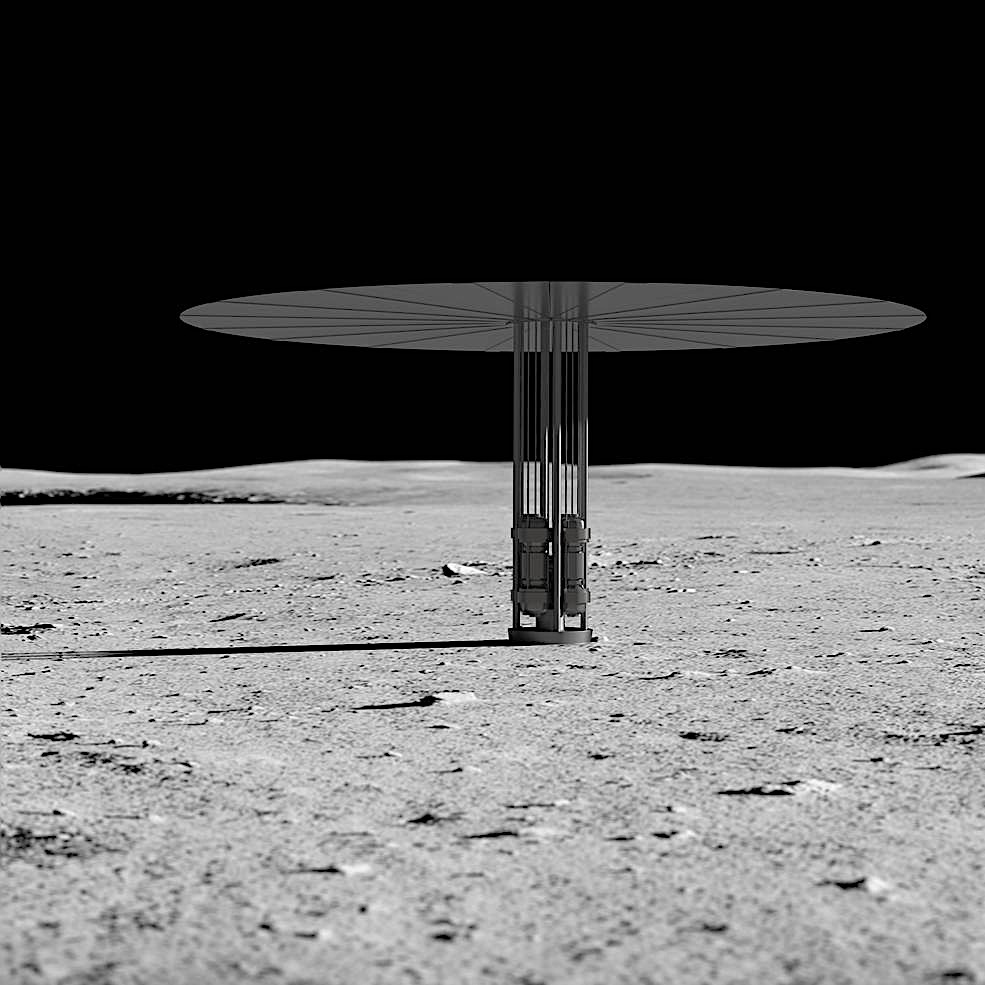
Colonizing Space with the help of KRUSTY
Nasa recently completed a successful test of a new prototype nuclear reactor coupled to a stirling engine, to be used for space colonization. There are many basics needed for living on a remote planet such as water, food, power. I know many of you may be thinking something like “Don’t they just use solar power?”. Well, yes and no.
Solar works in some environments and will even be used in these instances as an additional energy source but it is not safe for the only energy source. With things like dust and seasonal light availability, solar isn’t going to provide an always on power source. Nuclear power, on the other hand, will just keep chugging along.
I know Nasa has been using nuclear energy in space for decades but this is a much more powerful and efficient form of power generation. Traditionally Nasa has used a power source called a Radioisotope Thermoelectric Generator, also known as an RTG, such as the one pictured here from the Cassini probe.

They have used various versions of these in space exploration since the early sixties. They operate on basic thermodynamic properties and have no moving parts. A radioactive source such as Plutonium-238 is used which, through radioactive decay, generates heat. This heat is then applied to thermocouples to generate electricity, in the range of up of to hundreds of watts at most.
For living on another planet, though, there are several issues with these. They are low power, low efficiency and the radioactive material used is becoming increasingly rare, hence the need for something new.
This is where the new KRUSTY (Kilopower Reactor Using Stirling Technology) fission reactor unit comes into play.

These units are also nuclear powered, but work on the concept of nuclear fission vs. just simple decay. This is a small scale version of the same technology being used in commercial and military applications today. When I say small scale, I mean very small. The reactor core is about the size of a loaf of bread and uses enriched Uranium-235 for it’s fuel. Beryllium_oxide surrounds the core, used as a neutron moderator instead of the water in a typical reactor, slowing down the high energy neutrons, allowing them to produce more fission (See Diagram).

The combination of a single boron carbide control rod and a strong negative temperature coefficient of reactivity make this reactor safe and simple to operate. The control rod is used to start, stop and control the reactor while the negative temperature coefficient of reactivity helps moderate the power as the reactivity will reduce as temperature increases.
Liquid Sodium tubes are used to transfer that heat to Stirling engines which convert the heat into electricity, with the ability of a single reactor to produce up to 10 KW of power. Multiple units can be combined together to increase the power as needed.
NASA continues to push boundaries with this latest evolution of nuclear power for space exploration and habitation. With this technology the dream of colonizing other planets becomes that much closer.