
Diabetes is Such a Pain, But Does it Have to Be?
Diabetes is an insidious disease. In the case of Type 2 or adult onset diabetes, it creeps up on you, slowly destroying your body. I lost my mother, my uncle and also one of my best friends to this disease. The thing to remember is that it is not usually the disease itself which kills you, but all of the complications that come with it.
In the case of my mother, the organ damage and her body’s lack of ability to fight off infections led to the sepsis which she died from. My uncle died from complications following heart surgery which was most likely caused, if not contributed to by diabetes. My friend, who was only a couple of years older than me had many co-morbidity conditions from his diabetes which lead him to the hospital one too many times. He didn’t survive his last trip.
There is quite bit of research taking place regarding diabetes prevention and cures but no silver bullet as of yet. In this article I am going to talk a little bit about what diabetes really is, it’s causes and management. Along these same lines I want to cover the technologies available today and in the near future surrounding the management of the disease.

So, what is Diabetes? Diabetes is the inability of your body to properly manage the glucose levels in your blood. This can cause glucose levels which are too high or too low. These abnormal levels lead to tissue, organ and nerve damage over the long run and extremes of these levels can quickly lead directly to coma and death.

The main types of diabetes are classified as Type 1 and Type 2. Type 1 is usually, though not always, something you are born with. This type of diabetes is a result of the pancreas creating little to no insulin, which is what your body uses to regulate the glucose. Without producing insulin your sugars can quickly become out of control.
Type 2 diabetes is usually something which develops slowly over time. With type 2 diabetes, at least in the initial stages, your body still produces insulin but has a resistance to it. Essentially your body has a reduced ability to sense the insulin and use it to process the sugar, leading to high glucose levels.
Ultimately, diabetes is a numbers game. The goal is to keep your blood glucose levels in the range of 70-100 mg/dl before meals and not go over 140 mg/dl after meals when your blood sugars spike. Anything over 140 mg/dl is causing damage to many different parts of your body.
Since we know it is a numbers game, how do we measure and maintain those numbers? This is where the technology comes into play.

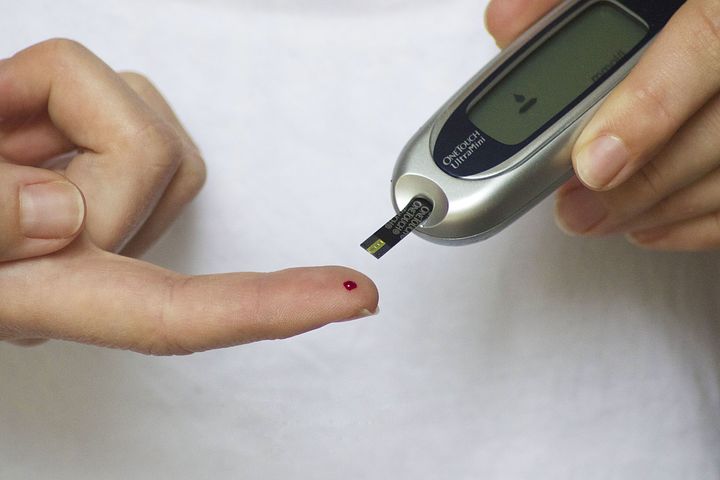
The most common method today is to prick a finger, get a tiny amount of blood and use a device to measure the glucose concentrations in that blood. Because this method can be both painful and expensive, diabetics don’t always check their sugars as often as they should or could.
So what about non-invasive methods? Well back in the 2001-2002 time frame, a company called Cygnus created a watch called the Glucowatch. It seemed to be the answer everyone was looking for. You could just look at your watch and read your sugar levels. Well, it seemed to good to be true and it was. It turned out the accuracy wasn’t great, there was a long warm up time, frequent finger pricks were still needed to calibrate the device and a large percentage of users had allergic reactions and rashes from the device. Eventually they stopped making it and the company went away with it.
So how about today? Well there are some new technologies out there but nothing I can find that has been released yet that is totally non-invasive, though many sites claim products are imminent to be released.
The current promising technologies seem to be mostly based around being able to read the glucose levels in the capillaries of thinner skinned areas such as the ear lobe or the skin between the thumb and index finger. This information is then fed to an app via bluetooth onto smartphones or tablets.
I am excited about where this technology is heading and hope to be able to write about this a year from now with there being a whole slew of products on the market that can do this accurately. Being able to simply check your app or have it alert you when sugars are out of their normal ranges would be great.
Now before someone comments about the CGM’s or Continuous Glucose Monitor devices out there, remember I am talking non-invasive. The current devices in this category require a probe to be placed below the skin and then a remote measuring device be stuck to the skin above this probe to then read and transmit the data. Not only are these probes still invasive, they generally have to be replaced every seven to 10 days and these devices are very expensive. A such, they are only recommended in instances where constant monitoring is medically required.

So, keeping diabetes in check is a pain, but hopefully in the near future this can be taken care of the same we can check temperature and blood oxygen levels today. Just clip on a probe and measure away.
Or maybe we will just be able to 3d print a new pancreas to cure the disease.